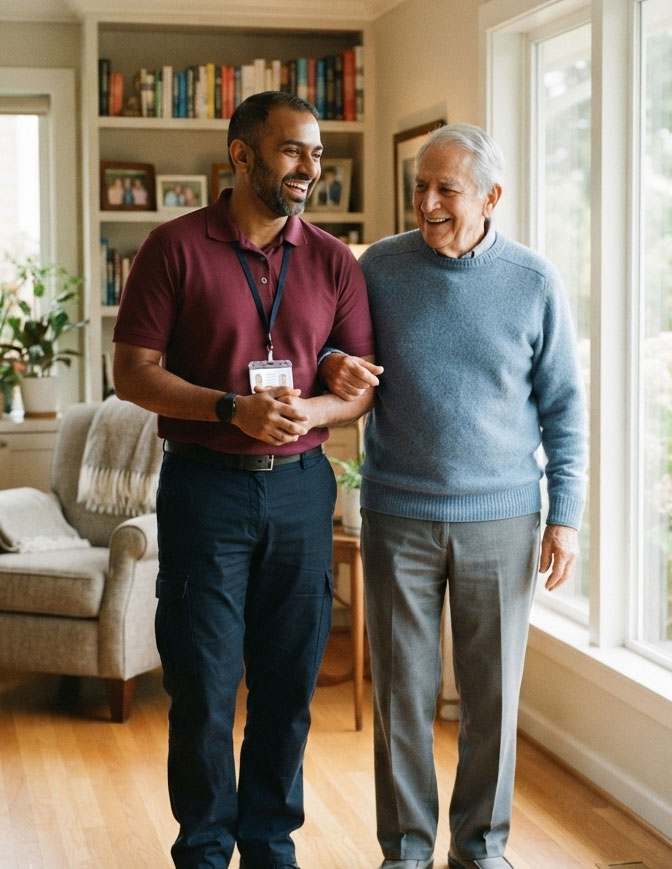
Home Health Aides (HHAs) are health care professionals who provide care to residents/clients in the comfort of their own homes. Their duties vary from routine housekeeping to providing personal care and activities of daily living to the individual at the comfort of his or her home. Home Health Aides also work in places other than individual private homes. They work in adult day care centers, assisted living facilities, home care agencies, and self-employment.
The need for Home Health Aide services and their chances of employment cannot be overemphasized due to the increased number of elderly, early hospital discharge, personal preferences, and hospice services.
Royal HCI’s Home Health Aide Training Program meets the requirements set forth under 42 CFR §484.80 — the federal Centers for Medicare & Medicaid Services (CMS) standard for Home Health Aide training.
Graduates receive HHA training credentials demonstrating completion of the program. Employment remains subject to each employer’s eligibility, competency, background-check, health, and onboarding requirements.
This is a three-week / 80-hour program.
We offer two scheduling options to fit your lifestyle:
Whether you’re transitioning careers, entering the workforce for the first time, or looking to expand your credentials, our schedule is built to make it possible.
Total Program Cost: $1,360.00
HHA tuition covers everything you need to complete the program:
NOTE: It is also estimated that additional costs may be incurred by the student.
Orientation for Home Health Aide
The program opens with a thorough introduction to the HHA role — what the job entails, what employers expect, and how HHAs fit into the broader healthcare team. Students learn about professional conduct, confidentiality, and the legal and ethical responsibilities that come with working in a client’s home.
Communication Skills
Effective communication is at the heart of quality home care. This unit covers how to communicate clearly and respectfully with clients, family members, and the care team. Students practice active listening, learn to document observations accurately, and develop skills for navigating sensitive conversations with empathy and professionalism.
The Home Care Aide and Families and Individuals
HHAs work closely with clients and families — often during some of the most challenging periods of a person’s life. This unit explores the caregiver-client relationship, how to respect client autonomy and cultural differences, and how to support both the individual and their family in a way that is compassionate and appropriate.
Anatomy and Physiology and Related Disorders
A working knowledge of the human body is essential for any healthcare professional. This unit introduces the major body systems and explains how common conditions and disorders affect each one — helping HHAs recognize changes in a client’s condition and report them accurately to a supervising nurse or care coordinator.
Human Growth and Development
Clients come from every stage of life. This unit covers the physical, emotional, and cognitive changes that occur across the human lifespan and helps students understand how those changes shape the care needs, communication styles, and daily routines of the people they serve.
The Older Adult in Our Society
The majority of HHA clients are older adults. This unit examines the social and healthcare landscape that shapes the lives of seniors in Massachusetts and beyond — including the challenges of aging, common misconceptions about older adults, and how HHAs can support dignity, independence, and quality of life.
Communicable and Infectious Disease Control
Protecting both clients and caregivers from illness is a core HHA responsibility. This unit covers standard precautions, proper hand hygiene, personal protective equipment (PPE), and infection prevention in a home care setting. Students also learn to recognize and respond to signs of communicable disease, including bloodborne pathogens.
Home Safety
The home environment presents unique safety considerations. This unit teaches students how to identify and address common hazards — including fall risks, medication storage, fire safety, and emergency preparedness — so that clients can remain safe and comfortable in their own homes.
The Home Care Aide and The Home
HHAs often assist with light housekeeping as part of a client’s overall care plan. This unit covers the HHA’s role in maintaining a functional home environment — including safe practices for cleaning, laundry, and household management — while always respecting the client’s personal space and preferences.
Maintenance of a Clean, Safe, and Healthy Environment
Building on home safety fundamentals, this unit focuses on the standards and practices that keep a client’s living space sanitary and health-promoting. Students learn proper cleaning techniques, waste disposal, and how environmental factors like air quality and clutter can directly affect a client’s health and wellbeing.
Nutrition
Good nutrition is a cornerstone of health, especially for older adults managing chronic conditions. This unit covers basic nutritional principles, meal planning and preparation, dietary restrictions, and how to recognize signs of poor nutrition or dehydration — and when to escalate those concerns to a supervising clinician.
Loss and Grief
HHAs frequently work with clients and families navigating significant loss. This unit helps students understand the emotional dimensions of grief, how to provide compassionate support during difficult times, and how to recognize when a client may need additional professional help.
Death and Dying
This unit prepares students to provide respectful, compassionate care to clients nearing the end of life. Topics include the physical and emotional signs of the dying process, communicating with clients and families during this time, and how HHAs can support comfort and dignity with sensitivity and professionalism.
Personal Care for Home Aide
Personal care is one of the most fundamental — and most trusted — aspects of the HHA role. This unit provides hands-on instruction in assisting clients with bathing, grooming, dressing, oral hygiene, mobility, and other activities of daily living (ADLs). Students also practice proper body mechanics to protect both themselves and their clients throughout every interaction.